

Tree Cabling Sacramento: Mature Tree Support Guide
When wind pushes a mature Sacramento tree, a weak branch union can widen in seconds and put a roof, driveway, or occupied yard below it at risk. Tree cabling Sacramento services may help support certain weak parts of an otherwise viable tree, preserving valuable shade while reducing strain at the defect.
Request a professional tree assessment from JT&M Tree Management to understand whether cabling, pruning, monitoring, or removal is the safest next step.
Cabling is not a cure for every structural problem, and it cannot make a tree failure-proof. A trained tree care professional must first inspect the tree, the defect, and anything that could be struck if a limb fails. The right plan may include cabling, bracing, pruning, monitoring, or removal. For broader guidance on professional care, see this Sacramento tree service foundations guide.
Tree cabling Sacramento: what support systems do
Tree cabling uses high-strength support lines installed between selected limbs or stems. The system is designed to limit excessive movement and reduce strain on a weak union. Bracing rods may also be placed through a split or weak area to add more rigid support.
Support for weak branch unions
Some mature trees develop two or more main stems that meet at a narrow angle. Bark may become trapped between the stems instead of forming a strong wood connection. As the stems grow heavier, wind and their own weight can place more stress on the union.
A properly planned cable can share some of that load. It limits how far the supported stems move apart during wind or storms. The goal is risk reduction while keeping as much healthy tree structure as practical.
Cabling is part of a larger plan
A cable only addresses a specific structural concern. It does not treat decay, poor roots, drought stress, or every weak limb in the canopy. That is why support work often starts with a full tree assessment and may be paired with selective tree pruning.
Reducing weight at the end of a long limb can lower the force placed on a weak attachment. In other cases, pruning may not be enough, and a support system can add another layer of protection. The best choice depends on the condition of the whole tree.
When does a mature tree need cabling?
Not every large or leaning tree needs a cable. Size alone is not the deciding factor. A professional looks for a structural weakness, the chance that it could fail, and the possible impact on people or property.
Visible warning signs
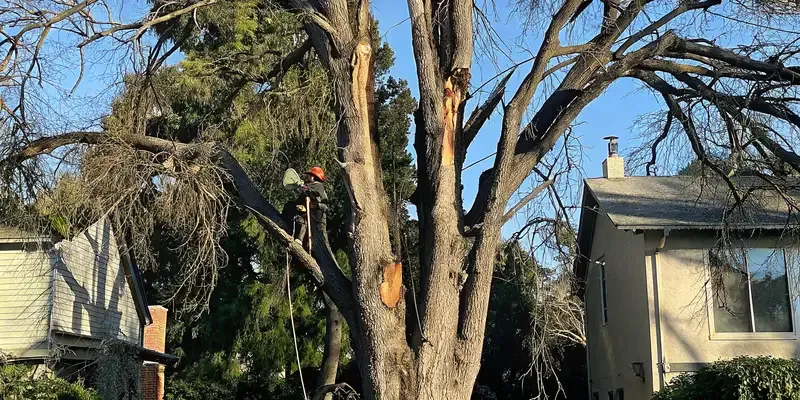
Property owners should arrange an assessment when they notice a new split, crack, hanging limb, or sudden change in the canopy. A gap that grows wider during wind or a main stem that begins to move apart also deserves prompt attention.
Two main stems joined in a tight V shape
A visible crack below a heavy branch or between trunks
A long limb extending over a roof, driveway, sidewalk, or play area
Old storm damage near a major attachment
A branch that has dropped or shifted unexpectedly
Decay, cavities, or mushrooms near a weak area
Targets beneath the tree matter
A structural defect becomes more urgent when a failed branch could strike a person, vehicle, building, utility line, or busy outdoor area. The same defect in a low-use part of a large property may call for a different plan. Risk depends on both the tree and its surroundings.
After severe weather, keep people away from any hanging branch or newly split area. Do not stand beneath the tree to inspect it. Contact a tree care professional for an assessment, especially if the problem is above a home or access route.
Cabling, bracing, pruning, or removal: which is right?
Tree support is not a one-size-fits-all service. The safest option depends on the location and severity of the defect, the tree's health, and the value of preserving it. A professional may recommend one method or a combination.
When preservation may be practical
Support may be worth considering when the tree is healthy enough to retain and the weakness can be managed. Mature shade trees offer benefits that take years to replace. A measured plan can help protect those benefits without ignoring the defect.
When support is not enough
Cabling cannot restore dead wood or stop advanced decay. It may also be unsuitable when the root system is failing, the trunk is severely compromised, or the risk remains too high. In those cases, professional tree removal may be the responsible choice.
How professional tree cabling is installed
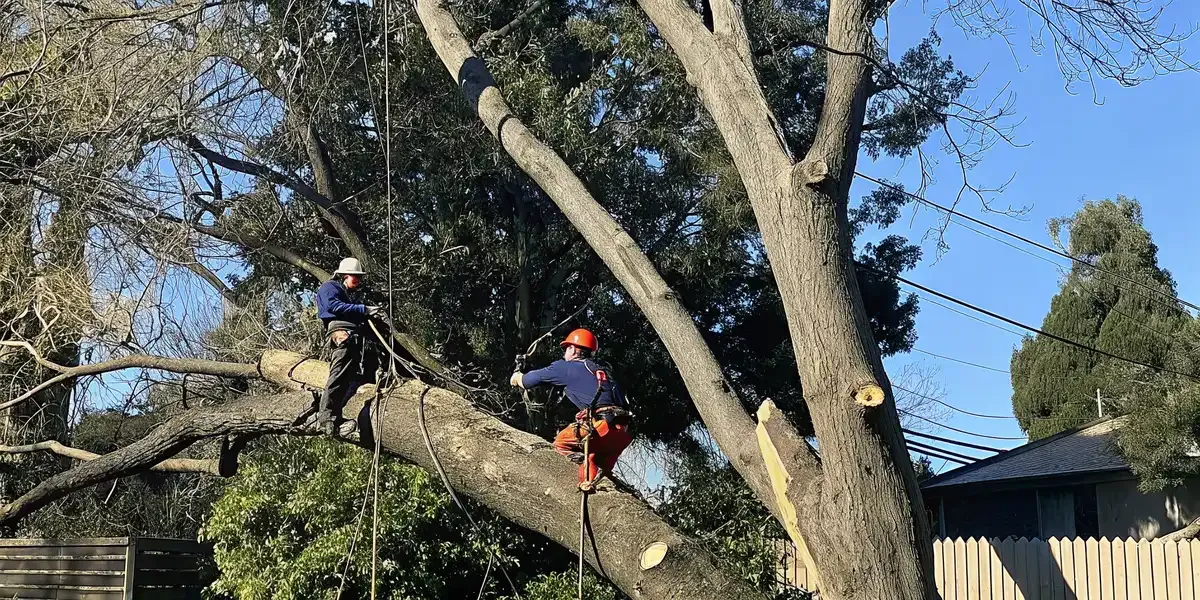
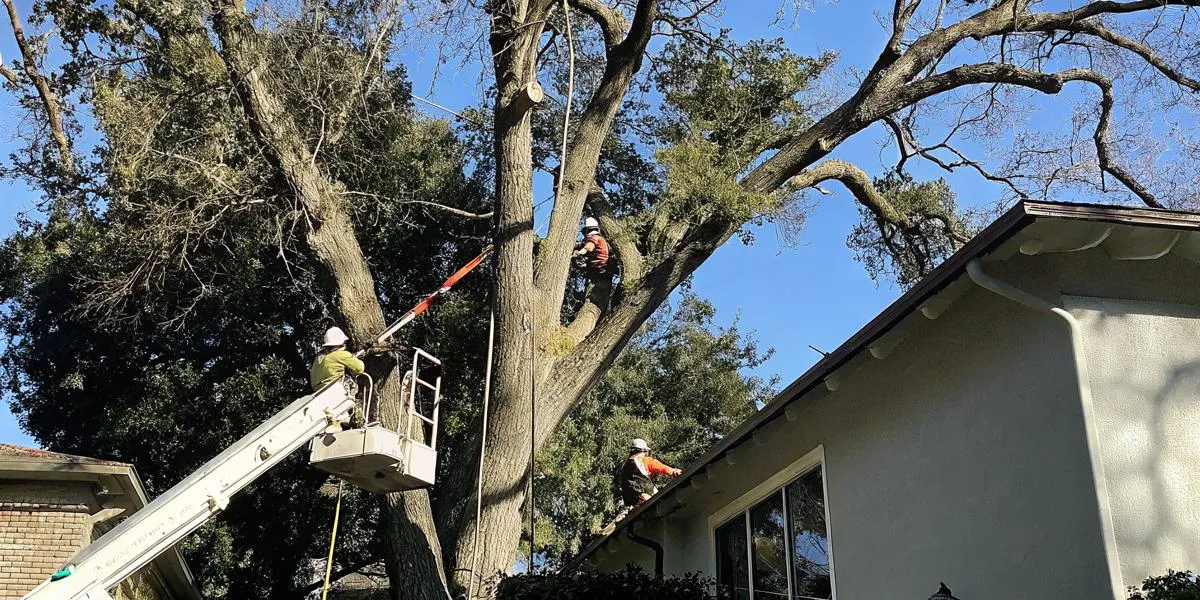
Support systems should be designed and installed by tree care professionals. Working high in a canopy involves fall hazards, heavy limbs, and forces that are difficult to judge from the ground. Incorrect placement can damage the tree or create false confidence.
- Inspect the whole tree.
The process starts with the crown, trunk, major unions, root area, and nearby targets. The visible crack may not be the only concern.
- Define the goal.
The professional decides what movement needs to be limited and whether pruning or other care should happen first.
- Select the support approach.
The tree's size, structure, and defect guide the type and placement of the system.
- Install with proper access and equipment.
The crew reaches the work area safely and places each component according to the support plan.
- Check the completed system.
The installation is reviewed for placement, tension, and its relationship to the tree's structure.
- Plan future inspections.
A support system needs follow-up as the tree grows and conditions change.
Why cable placement matters
A cable placed too low may not provide useful leverage. One placed through weak or decayed wood may not hold as intended. The system must also allow for normal tree movement rather than forcing the crown into a rigid position.
Why pruning may come first
Selective pruning can reduce the load carried by the weak union before support is installed. This does not mean topping the tree. Poor cuts can trigger weak regrowth, expose the tree to stress, and make future risk harder to manage.
Local factors that affect tree cabling in Sacramento
Sacramento-area properties often contain mature trees that provide valuable shade during hot, dry summers. Those trees may stand near homes, streets, parking areas, and outdoor spaces. The combination makes thoughtful risk management important.
Seasonal weather and changing loads
Dry summer conditions and winter storms can affect a tree in different ways. Leaf weight, wind, wet soil, and past limb loss all influence how force moves through the canopy. A tree that looked stable during calm weather may reveal movement or cracking during a storm.
After strong wind, look from a safe distance for fresh breaks, hanging branches, or a changed canopy shape. If you see a serious concern, keep the area clear and request an assessment. Emergency conditions call for prompt professional help.
Water, soil, and root conditions
A support system in the crown cannot correct a root problem. Changes in irrigation, construction, grade, or soil compaction may affect tree stability and health. Professionals consider these site conditions because the whole tree must be able to support the proposed plan.
Residential, commercial, and municipal settings
The right response also depends on how the site is used. A backyard tree, a tree beside a commercial parking lot, and a street tree may have different targets and access needs. JT&M Tree Management serves residential, commercial, and municipal clients with practical tree care focused on safety and tree health.
Does a tree support system need maintenance?
Yes. A cable or brace should not be installed and forgotten. Trees keep growing, defects can change, and new storms or pruning can alter the load. Regular inspections help confirm that the system remains appropriate.
What changes over time
Branches increase in size and weight. Hardware can become harder to see as the canopy fills in. New decay, cracks, or storm damage may also change the original risk. An inspection looks at the support components and the tree around them.
Signs that call for a prompt reassessment
A cable appears loose, broken, or unusually tight
A crack looks longer or wider than before
A supported stem changes position
New deadwood or hanging limbs appear
The tree suffers storm damage
Construction or soil disturbance occurs near the roots
Do not climb the tree or try to adjust a support line yourself. Keep people away from the affected area and contact a professional. A small visible change can reflect a larger shift in the tree's structure.
Why tree cabling is not a DIY project
Tree cabling involves more than attaching a line between two branches. The installer must understand load, leverage, wood strength, decay, and safe climbing. A mistake can injure the tree, cause hardware failure, or expose people below to danger.
Hidden defects are easy to miss
A crack visible from the ground may extend farther than it appears. Decay may be present around the union or inside a stem. Without a full inspection, a homeowner may support the wrong area while overlooking the more serious problem.
Incorrect hardware can harm the tree
Improvised ropes, straps, or fasteners are not a substitute for a planned tree support system. Materials can cut into bark, hold moisture, fail under load, or restrict normal growth. Even strong hardware is only useful when it is placed in sound wood and installed for the right purpose.
Professional care protects the whole property
A professional assessment connects the structural issue to nearby targets and the tree's long-term health. The recommendation may include support, monitoring, or related services such as professional tree pruning. The goal is not simply to keep a branch attached. It is to make a responsible plan for people, property, and the tree.
Frequently asked questions about tree cabling Sacramento
Can cabling save a split tree?
Cabling or bracing may help manage some splits, but suitability depends on the location, severity, decay, and overall tree health. A professional must inspect the tree before recommending support. Some splits create an unacceptable risk and require removal.
Will a cable stop a tree from failing?
No support system can guarantee that a tree will not fail. Cabling is intended to reduce movement and strain at selected weak areas. The tree still needs monitoring, proper care, and reassessment after major changes or storms.
How long does tree cabling last?
The useful life depends on the system, the tree's growth, and site conditions. Because trees continue to change, the better question is whether the system is still suitable now. Scheduled professional inspections help answer that question.
Can tree cabling replace pruning?
Not always. Pruning and cabling serve different purposes and may be used together. Selective pruning can reduce weight or wind load, while cabling limits movement between selected limbs or stems.
How do I know whether my tree needs support?
Arrange an assessment if you notice a crack, split, weak V-shaped union, hanging limb, or major branch over an occupied area. A professional can inspect the whole tree and explain whether support, pruning, monitoring, or removal is appropriate.
Request a tree care assessment
A mature tree with a weak union, split, or heavy limb deserves a careful look before the next storm. JT&M Tree Management can assess the tree, nearby targets, and practical support options for your Sacramento-area property.
Call (916) 664-7439 to request a tree care assessment and discuss the safest next step.
Comments