

Storm Damaged Tree Removal: When to Remove vs Prune After a Storm
High winds often leave large branches scattered across Sacramento yards and limbs tangled in power lines. You must decide quickly if a tree stays or goes to keep your family safe. Contact JT&M Tree Management at (916) 664-7439 for storm damaged tree removal today.
Choosing what to do with a damaged tree takes a close look at the trunk and roots. You must find out if the tree can heal or if it is a threat to your home. We cover these signs in When Should You Remove a Storm-Damaged Tree? Here is how.
Storm Damaged Tree Removal: When Should You Remove a Storm-Damaged Tree?
Severe weather can leave property owners with tough choices. After a heavy wind or rain event, your main goal is to keep your home and family safe. Contact JT&M Tree Management for 24/7 emergency tree removal if a tree blocks your drive or hangs over your roof. Not every damaged tree needs to come down, but knowing the signs of a high-risk hazard can help you act fast.
Check the Tree Crown and Canopy
The crown is the top part of the tree that holds the leaves and limbs. If a storm rips away a large part of this area, the tree may struggle to make food or grow new wood. A tree that loses more than 50% of its canopy generally needs full removal because it may not survive another season. Our team can check the health of the trunk to see if the tree has enough strength to recover or if it poses a threat to your yard.
Use this table to make a quick first assessment of your storm-damaged tree. When in doubt, call a licensed arborist for a professional evaluation.
Look for Trunk and Root Damage
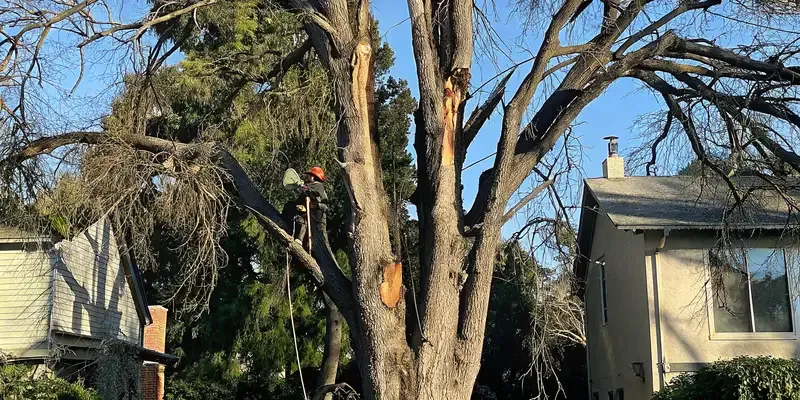
The trunk and roots are the base of any tree. When these parts fail, the risk of a fall goes up. You should look for deep splits in the main trunk or bark that has pulled away in large chunks. A split trunk is a big safety risk and is a top reason for storm damaged tree removal. You must also check the ground at the base of the tree for signs of root failure.
Roots can suffer harm even if you do not see them pulled out of the soil. A mature tree that leans more than 45 degrees after a storm often has hidden root system damage and should be removed. Key takeaway: If you see out-of-place roots or a new lean, the tree is no longer stable and needs expert help. We use high-end gear to remove these hazards without hurting your land or nearby plants.
When Can Pruning Save a Storm-Damaged Tree?
A storm does not always mean you must lose your tree. JT&M Tree Management provides professional trimming and pruning to help your trees recover from wind and rain damage. Many trees stay safe and strong if the main trunk and most of the crown are still in good shape. Professional pruning can fix Sacramento tree health weather issues by removing broken limbs before they cause more harm.
Signs Your Tree Can Be Saved
Minor damage like lost small branches or light scrapes can often be fixed with expert care. If the tree still has at least half of its crown, it likely has enough leaf area to stay healthy. Small wounds from broken twigs usually seal over on their own within a few years. An arborist can check these wounds to ensure the tree is not at risk for rot or pests. Proper pruning is needed for the long-term health and structural integrity of your trees after a big storm.
Repairing Broken Branches
When a large branch breaks, you must remove the stump to help the tree heal. The three-cut method is the best way to remove large branches without stripping the bark. First, make a small cut on the underside of the branch about 10 inches from the trunk. This stop-cut prevents the bark from tearing when the heavy limb falls. Next, cut through the top of the limb a few inches past the first cut. This second cut creates a hinge so the branch falls away cleanly.
The Final Cut and Healing
The third and final cut is the most important for the tree's health. You should saw off the rest of the stump just outside the branch collar. This is the thick ring of bark where the limb joins the trunk. Never paint pruning cuts with wound sealant or paint, as this can trap rot inside the wood. If you need help with 24/7 emergency tree removal or pruning, our team can assess the damage and find the best path for your property.
First Steps to Take After Storm Damage
A big storm can leave your yard in a mess. Taking the right steps fast helps you stay safe and keeps your home from more harm. If you face a fallen tree, you need a 24/7 emergency tree removal pro to handle the risk before it gets worse.
Safety check and assessment
Your first task is to look for clear risks. Storms often knock down power lines or leave heavy limbs hanging. You must check for downed wires and stay away from any tree that looks like it might fall. Never try to move a limb that is touching a wire or is near one.
Strong storm damage response prevents more harm to your land and keeps people safe. If you see a line on the ground, call the power company right away. You can find more safety tips on the CDC website about trees after a storm. Do not walk under damaged trees until a pro says it is safe.
Documentation and insurance
Once you are sure the area is safe, you should start to record the facts. Take clear photos of the trees and any damage to your house or fence. These shots act as proof when you talk to your agent. Most plans cover the cost if a tree hits a building you own.
- Prioritize safety first.
Check the ground for wires and look up for loose limbs. Do not start work until the area is safe.
- Document the damage with photos.
Take shots from many angles to show the full mess. This helps your claim move fast.
- Report the claim within 24 hours.
Call your agent fast to start the work. Ask them about your costs and how much they pay for wood removal.
- Contact a licensed arborist.
Get a pro to look at the site. A skilled crew has the right tools to clear large trees without more damage.
You must take photos of all damage before you move any wood or debris. This simple step makes the claim process much easier for you. If you wait, the firm might not cover the full cost of the work.
Professional help and recovery
Dealing with large trees after a storm is not a job for a DIY project. Fallen trees are heavy and can move in ways you do not expect. A pro knows how to cut wood that is under high stress. They use safety gear to stay safe while they work on your yard.
Getting help fast is the best way to get your land back to normal. Per the FEMA guidelines, good tree care helps stop harm in the next big storm. Working with a team that knows the area gives you the best care for your Sacramento home.
Why You Should Not Remove Storm-Damaged Trees Yourself
Storm-damaged trees are very dangerous to handle alone. High winds can leave trees in unstable states that are hard to see. Many people try to save money by doing the work themselves, but this often leads to injury or property damage. Hidden tension and widow makers can cause a tree or limb to snap without any warning. It is best to use a 24/7 emergency tree removal expert who has the right tools for the job.
The Danger of Wood Tension and Widow Makers
When a storm hits, it can twist and bend tree limbs in ways that store energy. This hidden wood tension is a major risk for anyone with a saw. If you cut into a limb under pressure, it can spring back or split with great force. Handling storm-damaged trees is unsafe due to these hidden risks and potential utility line hazards. You should always hire a licensed and insured arborist to check the tree first.
Another big threat is the "widow maker." These are broken branches that are hung up high in the tree canopy. They can fall at any time, even after the storm has passed. Professional teams use safety gear like helmets and harnesses to work around these hazards. They know how to spot these loose limbs before they cause harm to people or homes.
Power Lines and Hidden Root Damage
Downed trees often get tangled with utility lines. You must never approach or try to remove limbs that are near power lines. If a tree touches a wire, the ground around it can become deadly. You should contact your utility company and an insured arborist right away. Staying safe means keeping a wide distance from any tree that is near a power line.
Storms can also cause root damage that you cannot see from the surface. A tree that leans after a storm may have deep root injuries even if the soil looks fine. It is hard to predict if a leaning tree will fall later. Expert Sacramento tree health pros can check the lean and the roots. They have the training to tell if a tree needs to come down or if it can be saved.
Storm-Damaged Tree Removal in Sacramento: What to Expect
When a severe storm hits the Sacramento area, the damage to your yard can be sudden and risky. You may see large limbs on your roof or a tree leaning toward your home. In these times, you need a plan to keep your property and family safe. Professional 24/7 emergency tree removal starts with a fast response to fix the site and stop more harm.
JT&M Tree Management provides year-round help to clear storm debris and maintain fire clearance for your home.
Rapid Emergency Response
Storm damage does not wait for a set time to occur. High winds often cause trees to fail in the middle of the night. Because of this, JT&M Tree Management offers 24/7 help for hazardous conditions right away. A quick response is key to stop more property loss after a storm.
Once a team arrives, the first goal is safety. They will look for downed power lines and check if the tree is stable. This check helps the crew decide if they can save the tree with pruning or if a full removal is the only safe way forward.
Expert Check and Removal
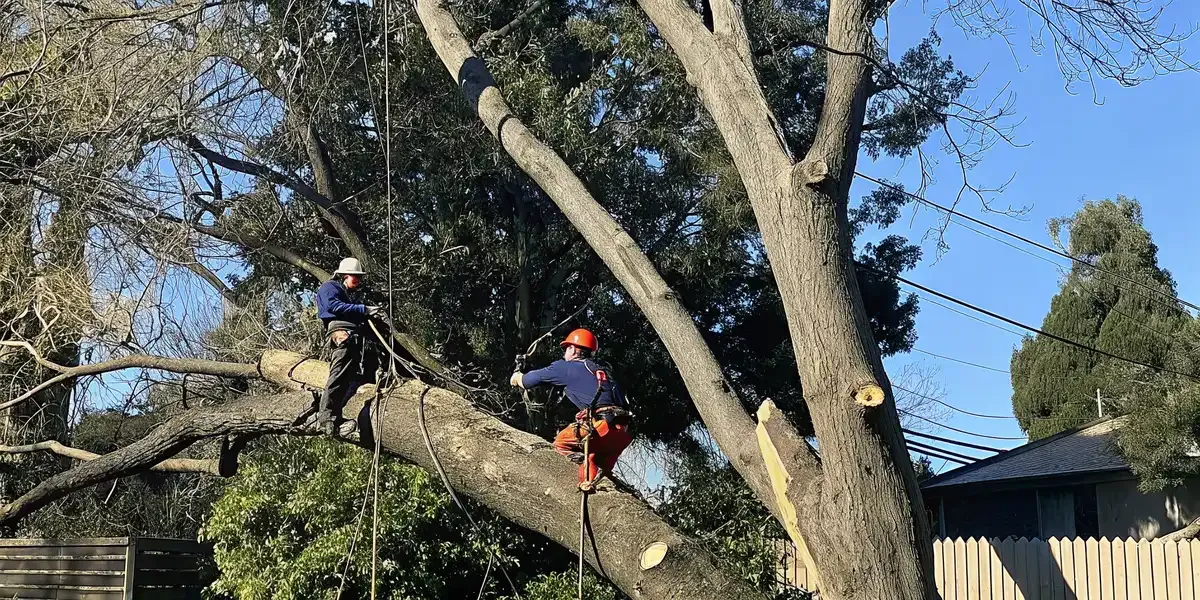
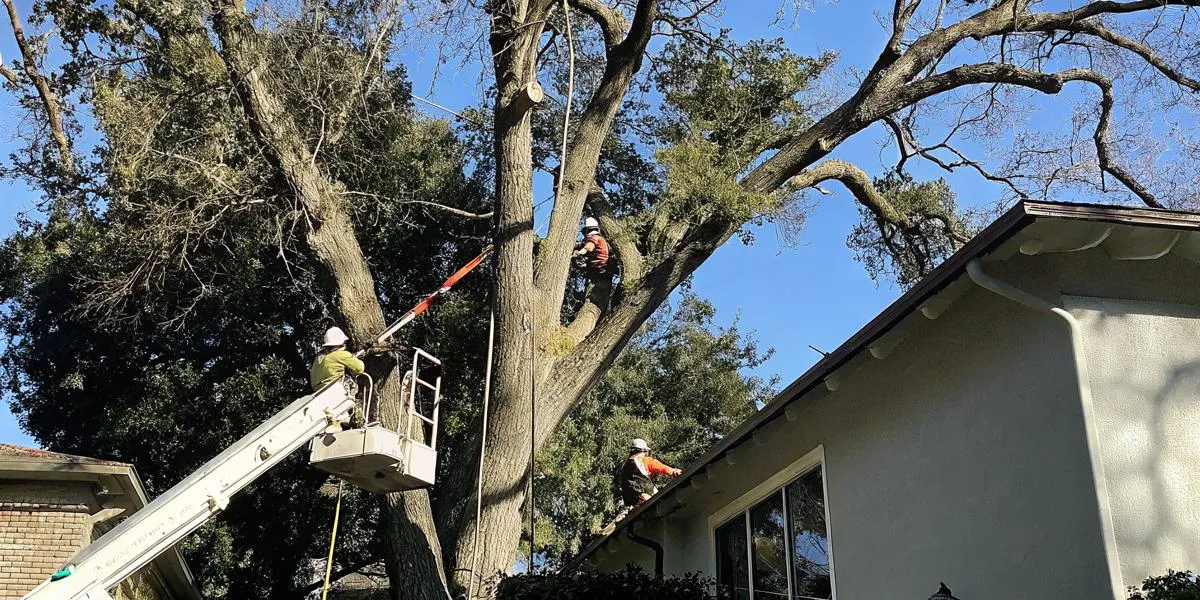
Tree experts use special gear to handle wood under tension. Storm-hit trees can snap or shift in ways that are hard to see. Crews bring helmets, ropes, and big tools to manage these risks. They follow strict rules to ensure no one gets hurt while they clean the yard.
If the tree has lost more than half of its top or has a split trunk, removal is usually the best choice for safety. Teams work in small parts to lower heavy limbs to the ground. This careful way keeps your house and fence safe while they clear the mess.
Stump Grinding and Site Cleanup
After the main trunk and limbs are gone, a large stump often stays in the ground. We suggest stump grinding to finish the job and remove future trip risks. This step also clears the way for new plants and keeps pests or rot out of the old wood.
Clearing storm mess is also a big part of fire safety. In Sacramento and Placer County, keeping a clean yard helps build safe space around your home. This is vital during hot months when dry wood can fuel fires. We serve Folsom, Roseville, Granite Bay, and Loomis to help you stay ready for any weather.
Frequently Asked Questions
How do I know if a storm-damaged tree needs removal?
A tree often needs removal if it has a split trunk or leans more than 45 degrees. Based on JT&M Tree Management, you should also think about removal if the tree has lost more than half of its canopy. These signs show that the tree is no longer safe or stable. A tree expert can check for hidden root damage that might make the tree fall later.
Does homeowner insurance cover storm-damaged tree removal?
Most property insurance plans cover tree removal if the tree falls and hits your roof or fence. But many plans do not pay for removal if the tree lands on the lawn without hitting anything. You should take photos of the damage and call your insurance agent as soon as you can. Check your plan to see if there are limits on cleanup costs or high fees you must pay first.
What should I do if a storm-damaged tree is tangled in power lines?
You must never go near or try to move tree limbs that are near or touching power lines. This creates a high risk of electric shock or fire. Your first step should be to stay away and call your power company to report the danger. You should also call an insured tree expert to help with the safe removal of the tree. Let experts with the right safety gear handle these risky jobs.
Is stump grinding necessary after storm-damaged tree removal?
While not needed, stump grinding is a good idea after you remove a tree. Leaving a stump can create a trip hazard and draw pests like termites or ants to your yard. Stumps can also grow new sprouts that are hard to stop. Based on JT&M Tree Management, grinding the stump keeps your yard clear and safe for new grass or plants.
How does removing storm-damaged trees help with fire safety?
Dead or broken wood from a storm can dry out and become fuel for a fire. Taking away these hazards helps keep the area around your home safe. This is vital in the Sacramento area during hot summer months. Clearing away debris and pruning damaged trees reduces the risk of a fire spreading to your property. Keeping your trees healthy and your yard clear is a key part of fire safety.
Ready to schedule your storm-damaged tree removal?
Leaving storm-damaged trees alone can lead to high repair costs or safety risks for your home because weak limbs may fall and cause more damage. When you act now, you can save trees that only need pruning before they become too frail to stand and cause harm to your yard. Our local team offers 24/7 emergency tree removal to clear away debris and make your yard safe before the next storm hits. By setting up a visit today, you ensure that unsafe trees are handled by experts so you can have a clear plan for your land. You will gain peace of mind knowing that your yard is safe and that your trees will stay healthy for many more years to come.
Ready to fix your yard? Call (916) 664-7439 to schedule a free consultation for storm-damaged tree removal.
Comments