

Do You Need a Sacramento Tree Removal Permit?
If you are planning to remove a tree in Sacramento, the safest first step is not picking up a saw. It is checking whether your tree may be protected by city or county rules. A Sacramento tree removal permit may be required depending on where the tree is located. Whether it is on public or private property, the species, the trunk size, and the jurisdiction that controls the address.
Need a professional opinion before you remove a tree? Contact JT&M Tree Management to request a local tree assessment or tree removal quote.
This guide is for Sacramento area homeowners, property managers, and business owners who want to understand when permit questions usually come up. It is not legal advice and it does not replace official City of Sacramento or Sacramento County guidance. Tree rules can change, and the correct answer depends on the exact property and tree. When in doubt, check the official agency before removing or heavily pruning a tree.
Sacramento Tree Removal Permit: Quick Answer: When Should You Check Permit Rules?
You should check permit rules before removing a tree in Sacramento if the tree could be a city tree. A private protected tree, a public tree, a native oak, a landmark tree, or part of a commercial, apartment, HOA, or development landscape. You should also check rules before major pruning if the tree is in a right-of-way, near a street, in a parking lot landscape, or on county managed land.
According to the City of Sacramento Tree Permits and Ordinances page, approved permits are required before regulated work can be performed on City Trees or Private Protected Trees. Sacramento County also states that a tree permit is required to remove or prune any public tree and certain private trees, according to its Sacramento County Tree Permits page.
The practical takeaway is simple: if the tree is large, native, near public property. Part of a commercial or shared landscape, or possibly protected, pause and verify before work begins.
Quick permit-check comparison
Confirm which jurisdiction governs the address.
Identify and photograph the tree, its location, condition, and trunk size.
Ask the applicable agency whether the planned work requires approval.
City of Sacramento vs. Sacramento County: Why Location Matters
One of the most common mistakes property owners make is assuming that every Sacramento address follows the same permit process. It does not. A property inside the City of Sacramento may follow city rules. A property in unincorporated Sacramento County may follow county rules. Properties in other cities within Sacramento County may need to check with their own city.
Sacramento County specifically advises residents who live in a city within the county to contact that city for tree permits or tree concerns. The county also points property owners to parcel tools to confirm whether an address is inside a city boundary.
This matters because the agency reviewing the question can affect the application process, the tree categories, and the documentation you need. Before you schedule removal, confirm the jurisdiction. If the tree is close to a sidewalk, road, alley, park strip, parkway, public land, or shared commercial landscape, be even more careful.
What the City of Sacramento Considers a Protected Tree
The City of Sacramento explains that permits are required for regulated work on City Trees and Private Protected Trees. The city describes City Trees as trees that are partially or completely located in a city park, on city owned property, or on a public right-of-way. That can include trees near streets, roads, sidewalks, park strips, mow strips, or alleys.
The city also identifies Private Protected Trees as trees that have special historical value, environmental value, or significant community benefit and are located on private property. The city lists several size and property categories, including native trees at 12 inch DSH. All trees at 32 inch DSH with an existing single family or duplex dwelling. And all trees at 24 inch DSH on undeveloped land or other property types such as commercial, industrial, and apartments.
DSH means Diameter Standard Height. In plain language, this is a way of measuring trunk diameter at a standard height above the ground. Because measuring rules can be specific, property owners should use the official city measurement guidance or ask a qualified tree care professional to help document the tree accurately.
What Sacramento County Says About Tree Permits
Sacramento County states that a tree permit is required to remove or prune any public tree and certain private trees. Public trees include trees on county owned land, such as parks or building grounds, and trees within right-of-way areas.
The county lists typical examples that may require a permit, including select landscaping trees in parking lots or landscaped areas around commercial buildings, apartment complexes. Or homeowners associations; native oak trees on any property, including private residential properties; public trees adjacent to roadways or on county land; and certain landmark trees.
For Sacramento County properties, permit questions may also come up during development review. If tree removal is part of a building permit, planning application, or site development project, county review may involve replacement mitigation or planting requirements. Do not assume a private tree can be removed without review just because it is inside a fence.
Common Tree Removal Scenarios in Sacramento
Every tree removal situation is different, but most permit questions fall into a few practical categories. Use these scenarios as a starting point for deciding whether you need to verify rules before work begins.
Dead, Dying, or Diseased Trees
A dead or diseased tree may still require documentation before removal if it is protected, public, native, or in a regulated location. Property owners often assume that a dead tree is automatically exempt. That is not always safe. Photos, a professional assessment, or agency confirmation may be needed, especially if the tree is large or located near a right-of-way.
Hazardous or Storm Damaged Trees
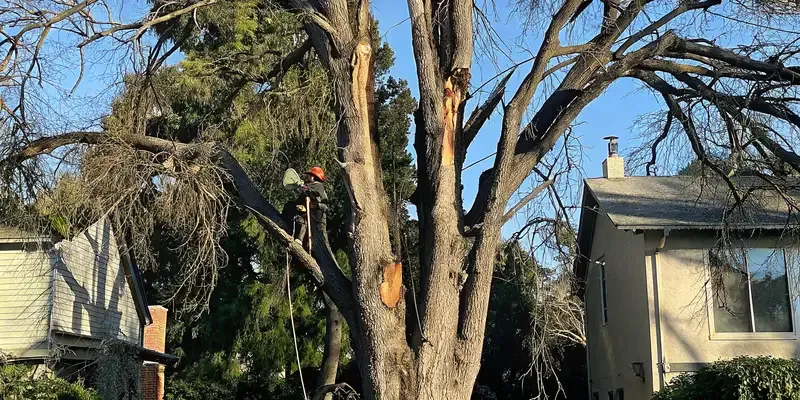
Storm damage can create urgent safety concerns. If a tree is leaning, split, uprooted, or touching a structure or utility area, the priority is protecting people and property. At the same time, you should document the condition with photos and contact the correct agency when a protected or public tree may be involved. For immediate hazards, emergency tree services can help assess risk and plan safe removal or cleanup.
Large Private Yard Trees
Large trees on private residential lots can trigger permit questions, especially if they meet protected size thresholds or are native species such as oaks. Before removing a mature tree, check whether the tree may fall under city or county protection. This is especially important in older Sacramento neighborhoods with established canopy trees.
Native Oak Trees
Native oaks deserve special attention. Sacramento County lists native oak trees as an example of trees that may require a permit on any property, including private residential properties. The City of Sacramento also includes several native trees in its protected tree discussion. If you are unsure whether a tree is a native oak, get help identifying it before taking action.
Commercial, Apartment, HOA, and Municipal Properties
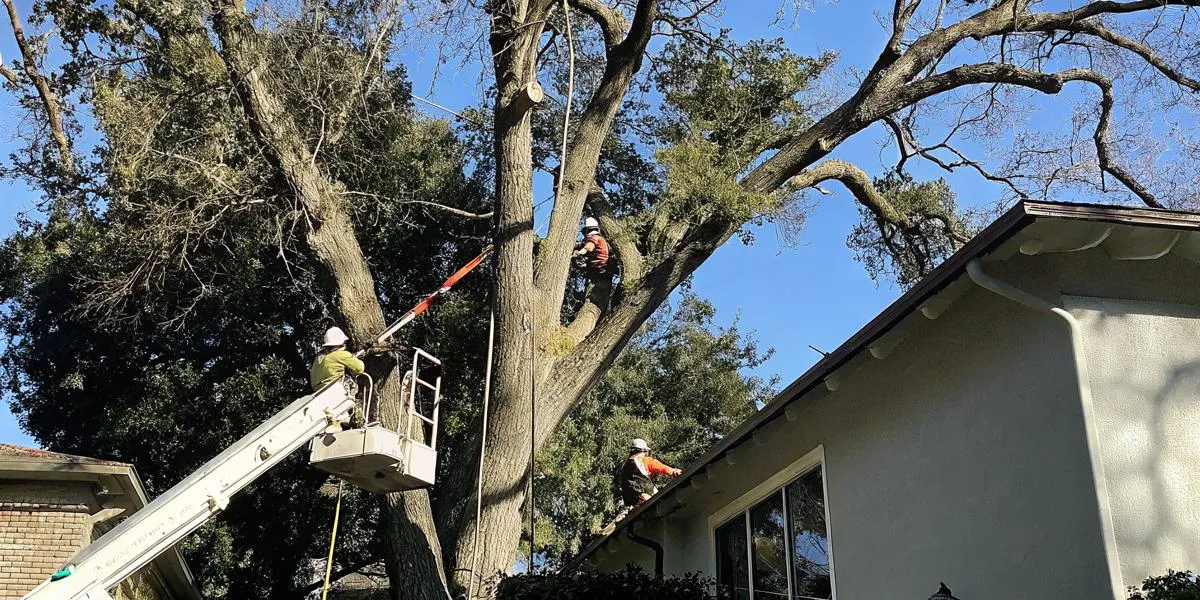
Commercial and shared landscapes often have more review points than a single private yard. Trees in parking lots, apartment common areas, HOA landscapes, municipal spaces, and development projects may be tied to landscape standards or permit conditions. JT&M Tree Management works with residential, commercial, and municipal clients. So our team can help property stakeholders understand the tree care work needed before they contact the applicable agency.
How to Prepare Before You Ask About a Permit
You do not need to know everything before contacting the city or county, but having the right information can make the conversation smoother. Gather the basics before you apply or ask for guidance.
- Property address:
The exact address helps determine jurisdiction.
- Tree location:
Note whether the tree is in a yard, parkway, sidewalk area, alley, parking lot, shared landscape, or near a public road.
- Tree species:
Identify whether it may be an oak, sycamore, buckeye, or another protected native tree.
- Trunk size:
Measure diameter using the agency's DSH instructions when applicable.
- Condition:
Document dead limbs, decay, disease signs, cracks, lean, root damage, or storm damage.
- Photos:
Take clear photos of the full tree, trunk, canopy, defects, nearby structures, and the base of the tree.
- Reason for work:
Be ready to explain whether the request is safety, disease, construction, property damage, clearance, or routine maintenance.
If you need help evaluating the tree before you contact the agency, review our tree management solutions or request an on-site assessment from JT&M Tree Management.
What a Tree Care Professional Can and Cannot Do
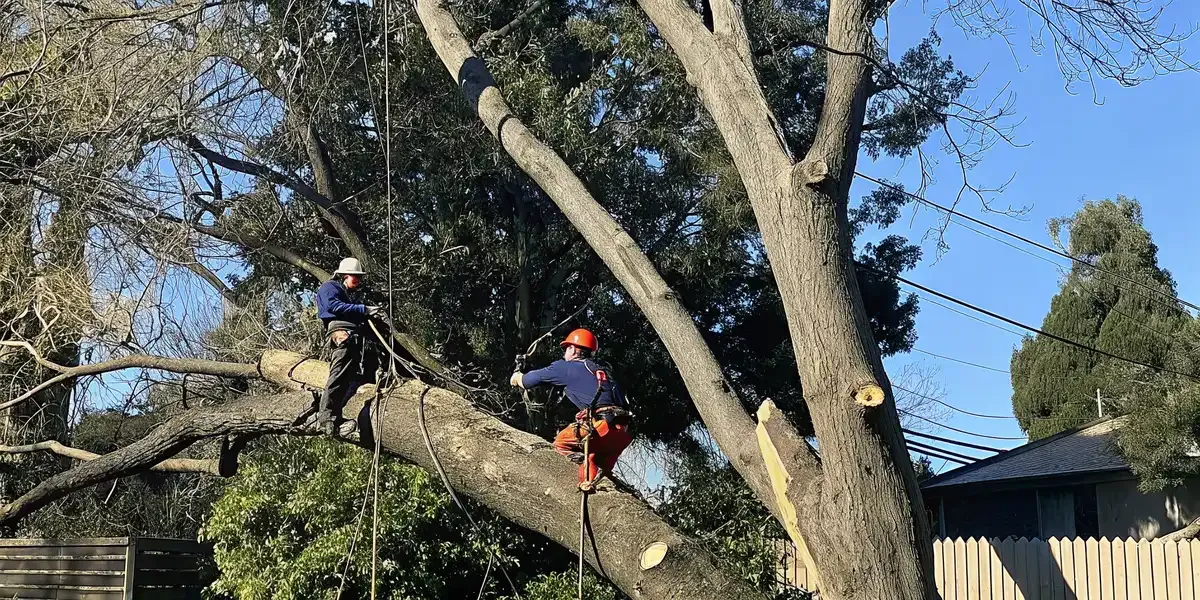
A professional tree care company can help inspect the tree, identify visible safety concerns. Recommend practical options, perform safe pruning or removal when authorized, and document the condition of the tree. A trained crew also has the equipment to work around structures, fences, roads, and tight access areas with less risk to people and property.
However, a tree care company should not promise that a permit will be approved, tell you to bypass a required permit, or provide legal advice. The final authority belongs to the city, county, or other agency with jurisdiction. JT&M Tree Management can help you understand the condition of the tree and the scope of work needed. But property owners should rely on official permit guidance for approval requirements.
This is especially important for protected trees. Removing a regulated tree without checking rules can create delays, fines, replacement requirements, or disputes with neighbors, HOAs, or local agencies. The small amount of time spent verifying the rules is usually far less expensive than fixing a preventable compliance problem later.
Permit Questions to Ask Before Removal
When you contact the appropriate agency, ask clear, specific questions. This helps you get a practical answer instead of a general one.
Is this property inside the City of Sacramento, unincorporated Sacramento County, or another city?
Is the tree considered a city tree, public tree, private protected tree, landmark tree, or native oak?
Does the trunk size trigger a permit threshold?
Does pruning require a permit, or only removal?
What photos, measurements, or forms are required?
Is emergency work handled differently if the tree is an immediate hazard?
Are replacement trees, mitigation, or follow-up inspections required?
How long does review usually take?
The City of Sacramento says permit applications are generally processed within 10 business days after the Urban Forestry office receives them. Though timing can vary depending on the request and request volume. If you are planning a larger landscape project, build review time into the schedule.
Tree Removal Is Not the Only Option
Sometimes the safest answer is removal. Other times, pruning, cabling, disease treatment, clearance work, or a health care plan may reduce risk while preserving the tree. Sacramento places real value on urban canopy, and mature trees can provide shade, cooling, habitat, and property appeal when they are healthy and structurally sound.
Before deciding, consider whether the issue is the whole tree or a specific limb, whether decay is localized. Whether the tree is interfering with a structure, and whether professional pruning can correct the concern. Our tree health care solutions can help property owners understand when preservation is realistic and when removal may be the responsible choice.
For hazardous trees, waiting too long can increase risk. For protected trees, acting too quickly can create compliance issues. The best path is a documented assessment, official permit verification when needed, and safe work by a qualified crew.
FAQ: Sacramento Tree Removal Permit Questions
Do I always need a Sacramento tree removal permit?
No. Not every tree removal requires a permit, but many situations should be checked before work begins. Permit questions are more likely when the tree is large, native, protected, in a public right-of-way. On county or city property, in a commercial or shared landscape, or part of a development project.
Who handles tree permits, the City of Sacramento or Sacramento County?
It depends on the property location. Properties inside the City of Sacramento may follow city rules. Properties in unincorporated Sacramento County may follow county rules. If the property is in another city within Sacramento County, contact that city for permit guidance.
Can I remove a hazardous tree before getting a permit?
Immediate hazards should be handled with safety as the priority. But you should document the condition and contact the appropriate agency when a protected or public tree may be involved. Take photos before work when it is safe to do so and ask the agency how emergency situations are handled.
Are oak trees protected in Sacramento County?
Sacramento County lists native oak trees as a typical example of trees that may require a permit on any property, including private residential properties. If you may have a native oak, verify the rules before pruning or removing it.
Can JT&M Tree Management get my permit approved?
JT&M Tree Management can assess the tree, recommend a safe scope of work, and help you understand what information may be useful when contacting the agency. We cannot approve permits, guarantee approval, or replace official city or county guidance.
Get Local Help Before Removing a Tree
Tree removal in Sacramento is not just a labor decision. It can involve safety, tree health, property protection, and permit questions. Before you remove a large or possibly protected tree, confirm the jurisdiction, document the tree. Review the official city or county guidance, and get professional help when the work is complex or hazardous.
JT&M Tree Management provides professional tree removal, emergency tree service, tree health care, and residential, commercial, and municipal tree care in the Sacramento area. Contact us today to request a tree assessment or removal quote.
Comments